


By using this website, you agree to the storing of cookies on your device to enhance site navigation, analyze site
usage, and assist in our marketing efforts. View our Privacy Policy for more information.
When the Norwegian Computing Center won an open ESA tender in 2024 to build a foundation model for Earth observation, they were competing against larger European players. They won. The result is THOR — a single AI system trained on 22 terabytes of satellite data from four different Sentinel sensors, built on LUMI, one of Europe's most powerful supercomputers, and released in February 2026 as fully open source.
Where traditional AI required a separate model for every task — one for sea ice, another for flood mapping, another for snow cover — THOR works as a shared platform that can be rapidly adapted to new problems with far less data and computing power. It maps icebergs, wetlands, oil spills and vegetation. It enables near-real-time environmental monitoring. And it is available to anyone with basic Python skills and an interest in what satellites can see.
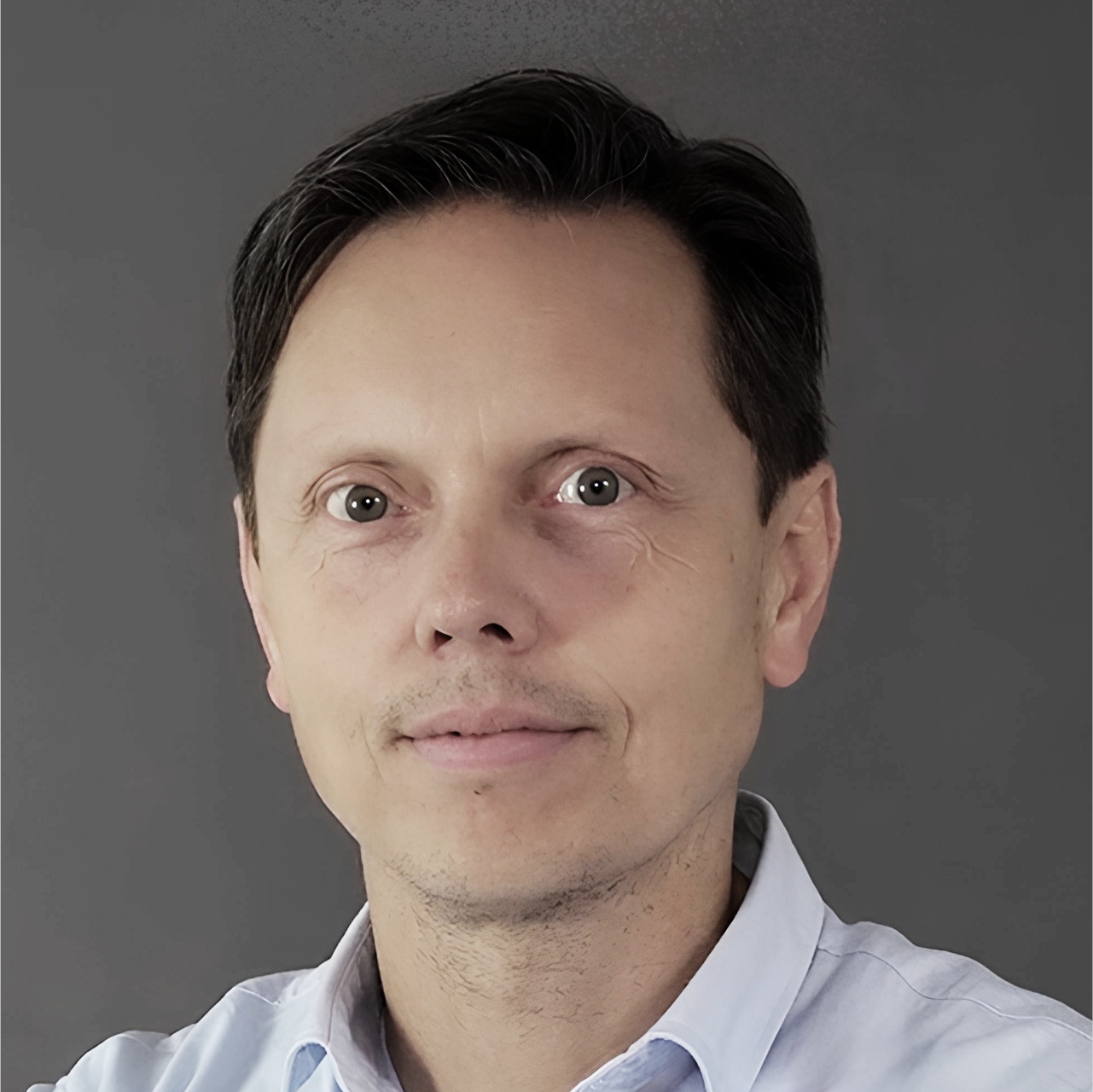
For Chief Research Scientist Arnt-Børre Salberg, who has led the project from the start, THOR marks a clear technological turning point. "This wasn't remotely possible when I started my research career twenty-five years ago," he says. "Not ten years ago either." The shift mirrors what foundation models have done for text — except here, the training data is the surface of the Earth, and the implications run from Arctic shipping safety to Norwegian hydropower management to flood preparedness.
The story goes back further. In 2017, Salberg gave a talk at the very first Spaceport Norway conference, when the Norwegian Computing Center was already well ahead in research on AI and Earth observation — at a time when the field barely had an established name. That talk set in motion a collaboration with ESA that is still running today. THOR is, in many ways, where that story leads.
At Ground Control #3, Salberg will take us from those early days to the present moment — and show what it means that a Norwegian research institute is now setting the European standard for AI-powered satellite intelligence.
Arnt-Børre Salberg is Chief Research Scientist at the Norwegian Computing Center, affiliated with the Department of Image Analysis, Machine Learning and Earth Observation. His research focuses on deep learning, computer vision and remote sensing — spanning land cover mapping, emergency monitoring, marine science, coastal habitat mapping and foundation models, across data from satellites, seismic sensors and marine echosounders.
Project: Foundation Models for Climate and Society (FM4CS)Partners: The Danish Meteorological Institute, the National Meteorological Administration of Romania, the Norwegian Water Resources and Energy Directorate (NVE), Polar View ApS, UiT Arctic University of NorwayFunding: The European Space Agency (ESA) – Φ-labPeriod: 2024–2025
Date: Wednesday 29 April 2026 Time: 1700–2000 (programme 1700–1830, networking 1830–2000) Venue: Mesh Youngstorget, Møllergata 6, 0179 Oslo Price: Free (registration required)