


By using this website, you agree to the storing of cookies on your device to enhance site navigation, analyze site
usage, and assist in our marketing efforts. View our Privacy Policy for more information.
Computing needs power, cooling and land, and on the ground all three are getting harder to secure. Large technology companies and a growing number of startups are now looking at low Earth orbit instead: data centres running on near-continuous solar power, with no water and no land to compete for.
The idea is easy to state and hard to deliver. In a vacuum, heat can only leave by radiation, so the radiators have to be large. Every kilogram has to be launched. And putting thousands of tonnes of hardware into orbits already crowded with satellites and debris raises a question for everyone who depends on low Earth orbit.
This Ground Control takes the idea apart with people who work on the pieces: cooling, power, the economics of computing, and the orbital environment itself. For Norway the question has a particular edge, because our own case for data centres rests on the opposite argument: clean, affordable power on the ground.
The evening is hosted together with Tekna Space and Tekna Big Data, and brings the space sector and the data and computing community into the same room.
17:30 Doors open
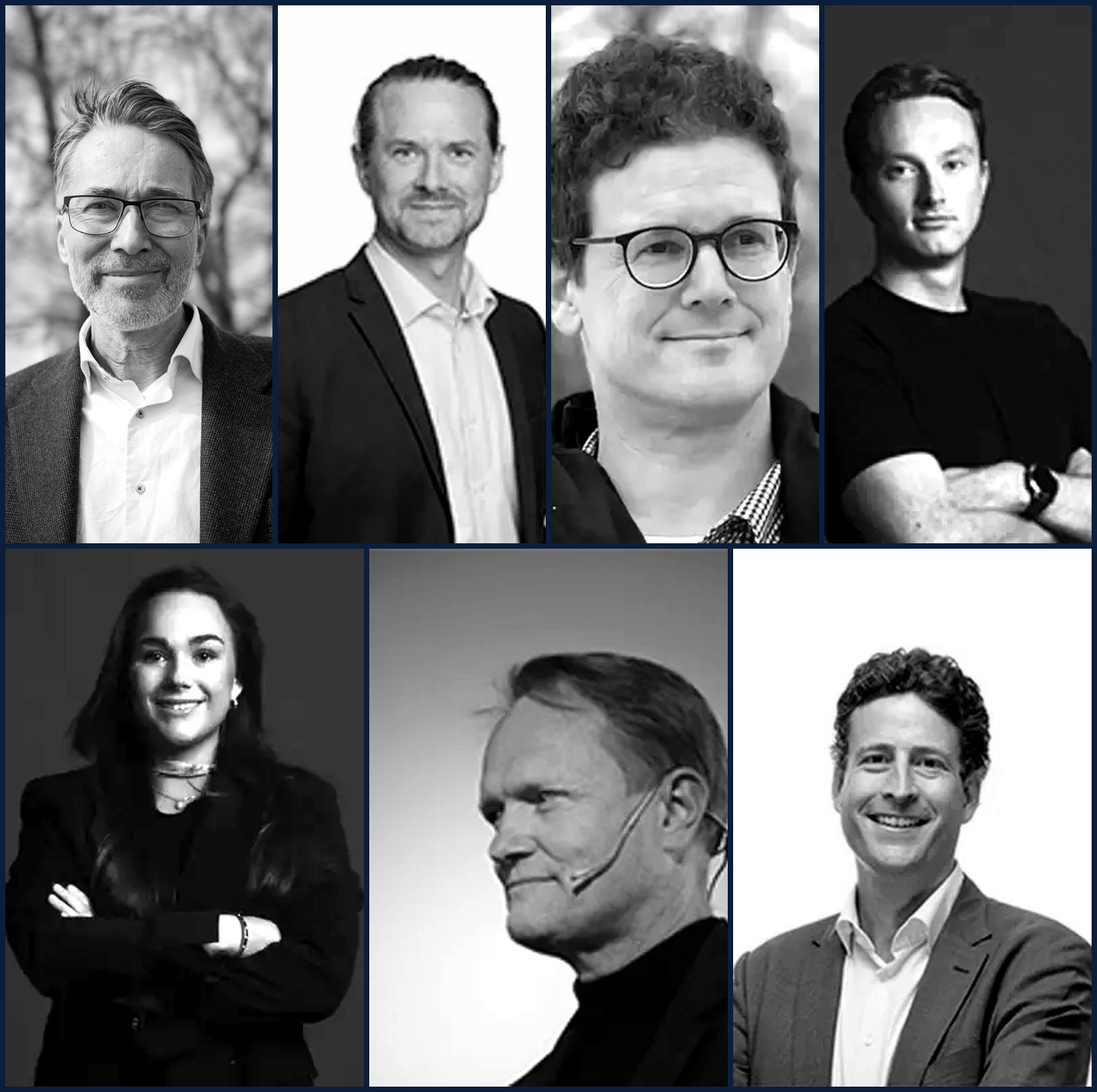
18:00 Intro: Innovations of the new orbital economy. Bjørn Ottar Elseth, Chief Technology Officer & Co-Founder, Nordic Space Bridge, and Brage W. Johansen, CEO, Spectrum Blue
18:10 Cooling systems in space. Mats Burud Skjølsvold and Sandra Rønquist Slåttelia, co-founders, Light Technologies
18:20 Solar power in space. Joost van Tooren, Commercial Director, Space, Alatyr
18:30 Cooling and data processing in space: (some of) the realities we need to overcome. Øyvind Storesund Hetland, Partner, inFuture
18:50 Thousands of metric tons of material in LEO: is it doable? Tom Grydeland, Senior Researcher, NORCE
19:05 Conversation and networking
Øyvind Storesund Hetland, Partner, inFuture
Øyvind Storesund Hetland is a physicist and a partner at inFuture, the Oslo-based strategy and innovation consultancy. He has spent a decade taking AI systems from pilot to production for some twenty organisations in industry, energy and the public sector, working on a wide range of data science and engineering challenges. He holds a PhD in applied physics from NTNU, in computational electromagnetics.
Øyvind’s interest sits where the physics meets the invoice: what a GPU-hour actually costs, what it takes to keep it running, and where the heat goes. On orbital data centres, that makes him less interested in the vision than in the arithmetic: radiator area, launch mass, dollars per kilogram. He is also interested in what it means for a country whose own data-centre pitch is the opposite one: cheap, clean power on the ground.
Tom Grydeland, Senior Researcher, NORCE
Tom Grydeland is a Senior Researcher at NORCE in Tromsø, in the Energy & Technology Division, specialising in Earth observation. He has contributed to numerous projects and publications, including on space debris monitoring. He is one of the key figures behind the EISCAT research radar, which monitors objects in orbit. EISCAT is now being replaced by a new generation of space radar facilities in Skibotn (Norway), Kaiseniemi (Sweden) and Karesuvanto (Finland), known as EISCAT 3D.
His question for the evening: will large amounts of material in the form of orbital data centres create enough space debris to make low Earth orbit unusable?
Mats Burud Skjølsvold, Co-founder, Light Technologies
Mats is co-founder and CEO of Light Technologies. He is responsible for company strategy, fundraising and business development, and has worked closely with industry partners. He moved from Oslo to Nord-Trøndelag at 15 to pursue his ambition of becoming one of the world’s best cross-country skiers, and competed for several years at national level as a senior athlete. He has broad work experience across different roles.
Sandra Rønquist Slåttelia, Co-founder, Light Technologies
Sandra is responsible for product development and execution, and combines engineering with business development. She started working at 16 and has experience across several sectors, including two engineering roles in renewable energy and in building and construction. She co-founded Embla Invest NTNU (2022), NTNU’s first female investment group, and hosts a podcast.
Joost van Tooren, Commercial Director, Space, Alatyr
An aerospace engineer from TU Delft, Joost was Programme Manager of ArianeGroup’s SUSIE project, a reusable upper stage for crew and cargo. In that role he built deep expertise in the European and global ecosystems for human and robotic space exploration. He also contributed to ArianeGroup’s long-term technology roadmapping and secured industrial partnerships for breakthrough technologies. At Alatyr, he leads the company’s commercial development of orbital data centres: large-scale computing and storage infrastructure designed for deployment in space.
Brage W. Johansen, CEO, Spectrum Blue
Brage Johansen is CEO of Spectrum Blue and a board member of Tekna Space, Norwegian Space Cluster, Nåva Space, LOOK – Lunar Robotics Competition and Earth Moves. Over the last 15 years he has developed and commercialised new innovations as CEO of Zaptec, Desert Control and Heimdall Power.
Bjørn Ottar Elseth, Chief Technology Officer & Co-Founder, Nordic Space Bridge
His experience spans satellite operations, Earth observation, space transportation, technology, procurement of satellites and launch services, and industrial policy, and he has served as Norwegian delegate to ESA within space transportation, technology, industrial policy and exploration. He was also instrumental in establishing ESA BIC Norway, supporting the development of a new generation of Norwegian space companies.

This Ground Control is hosted together with Tekna Space and Tekna Big Data, Tekna’s professional networks for space and for data and analytics.
Thank you to Tekna for making the evening possible.
Practical information
Date: Wednesday 25 November 2026
Time: 17:30–21:00 (doors 17:30, programme from 18:00)
Venue: Mesh Youngstorget, Møllergata 6, 8, 0179 Oslo
Price: FREE (registration required)